

Many global teams assume that web marketing works the same way everywhere. If a strategy performs well in the US or Europe, they expect it to succeed in Japan as well.
Of course, Japanese users search in Japanese—using a combination of hiragana, katakana, and kanji—so effective SEO in Japan requires carefully optimized Japanese-language content, not simple translation.
But web marketing in Japan is different for another reason as well.
Japanese users often research longer, compare more carefully, and require stronger trust signals before they act. Even when the product is excellent, marketing performance in Japan can stall if the web experience feels incomplete, unclear, or culturally “off.”
This is why succeeding with web marketing in Japan requires more than global best practices. It requires understanding how Japanese users search, evaluate, and build trust on the web.
In this guide, you’ll learn:
- How Japanese web behavior affects marketing outcomes
- The most common mistakes global brands make in Japan marketing
- A practical framework to build a web marketing strategy in Japan
- Real results from japan web marketing projects (SEO + trust + structure)
目次
Why Web Marketing in Japan Is Different from Other Countries
To win with web marketing in Japan, don’t start with tactics. Start with how people search, judge, and decide.
Japanese users tend to:
- Collect information first, then commit later
- Avoid risk, especially with unfamiliar brands
- Prefer web pages that feel complete, structured, and credible
This changes marketing fundamentals: conversion is usually the outcome of accumulated trust, not persuasion.
Understanding the Japanese Web Behavior
To succeed with web marketing in Japan, you must first understand how Japanese users behave online.
Japanese users tend to be highly cautious, information-oriented, and comparison-driven.
◼️Figure : Japanese Trust Mass Media in 2024
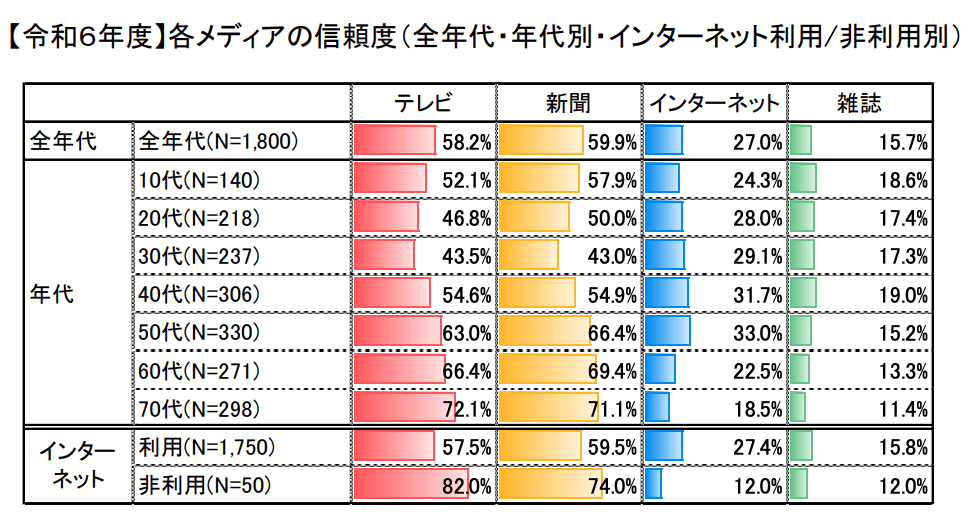
※source : Minister for Internal Affairs and Communications in Japan [White Paper
on Information and Communications in Japan (page 6)]
Unlike some Western markets, users in Japan rarely make quick decisions based on a single landing page or advertisement.
Key characteristics of Japanese web behavior include:
- Extensive research before action
- Preference for detailed explanations
- Strong reliance on credibility signals
- Low tolerance for vague claims
In web marketing, this means that short, aggressive sales pages often underperform in Japan.
Japanese users typically:
- Read multiple pages
- Compare competitors carefully
- Look for proof, data, and reassurance
- Avoid taking action until they feel safe
From a marketing perspective, Japan is a “low-risk-tolerance” market.
This is why web marketing strategies that emphasize:
- urgency,
- scarcity,
- or emotional pressure
may feel uncomfortable or even suspicious to Japanese users.
Instead, effective web marketing in Japan focuses on education, clarity, and reassurance.
Another important behavioral trait is mobile-first usage.
Japan has one of the world’s highest mobile internet penetration rates, and most web marketing interactions happen on smartphones.
◼️Figure : Trends in Internet Device Usage Rates
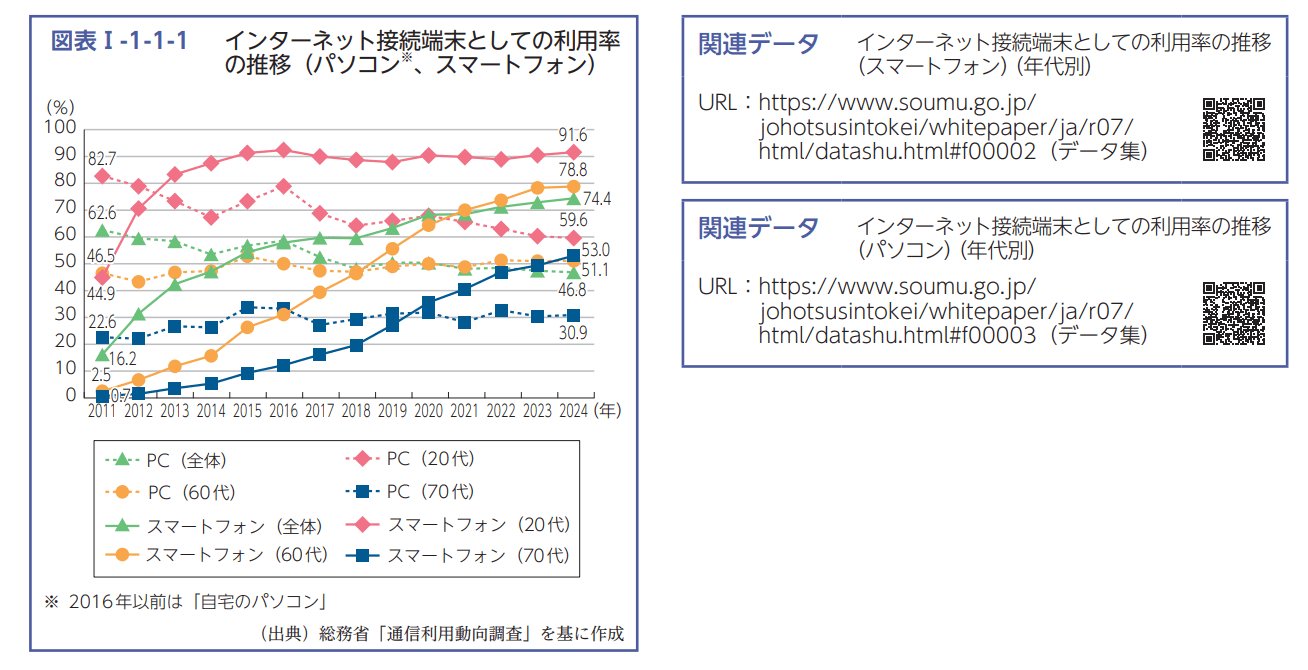
※source : Minister for Internal Affairs and Communications in Japan [White Paper
on Information and Communications in Japan (page 2)]
This affects:
- Web design
- Page structure
- Content length
- Call-to-action placement
A successful web marketing strategy in Japan must be mobile-optimized, easy to scan, and visually organized.
Micro summary: In web marketing in Japan, Japanese web behavior favors depth over speed, clarity over persuasion, and trust over hype.
Why Trust Matters in Japanese Web Marketing

If you want one rule for japan web marketing, it’s this: trust is the conversion engine.
Japanese users often ask (silently):
- “Is this company reliable?”
- “Have they helped people like me in Japan?”
- “Will I feel safe contacting them?”
So web marketing in Japan must build credibility before it asks for action. The most effective trust signals include:
- Real company profile (history, location, team)
- Photos of staff and office (not only stock images)
- Client examples and case studies (with context)
- Clear process (what happens after inquiry)
- Third-party proof (media mentions, certifications, reviews)
A common mistake is assuming that strong branding alone creates trust. In Japan marketing, trust is built through transparency + completeness + tone.
Also, language nuance matters. Even if your Japanese text is grammatically correct, awkward phrasing can reduce trust instantly. That’s why web marketing in Japan requires localization, not just translation.
Micro summary: In web marketing in Japan, marketing works best when your web copy feels natural, calm, and credible in Japan.
Local Platforms That Dominate Web Use in Japan
Another reason web marketing in Japan is different: the platform ecosystem is not identical to other countries, and user expectations vary by channel.
A practical way to think about japan web marketing is:
- Search (SEO) = discovery + validation
- Social = familiarity + reassurance
- Messaging = relationship + retention
Many Japanese users expect a brand to be consistent across:
- web pages
- social profiles
- local listings
- messaging channels
So your marketing performance improves when your web content connects to a broader Japan presence.
High-level channel roles in web marketing in Japan:
| Channel | Main role in japan web marketing | Best use |
| SEO (web search) | High-intent discovery | Long-form pages + structured answers |
| Social | Reassurance | Visual proof, day-to-day credibility |
| Messaging | Nurture | Follow-ups, updates, trust reinforcement |
| Paid ads | Acceleration | Test offers, support SEO, retargeting |
Micro summary: In web marketing in Japan, your website is the trust hub, and marketing channels should support the web journey.
Mistakes Global Brands Make in Web Marketing for Japan

Most failures in web marketing in Japan don’t come from low budgets. They come from wrong assumptions.
Below are the three high-impact mistakes that damage marketing performance in Japan—often without teams realizing it.
Japanese Web Design Is Not Just About Aesthetics
In web marketing in Japan, design is not only “how it looks.” Design is how information is organized for reassurance.
Many global brands bring minimal layouts to Japan. The page looks clean—but Japanese users may interpret it as:
- missing details
- unclear
- incomplete
- not trustworthy
This doesn’t mean Japan web pages must be cluttered. It means they must feel thorough.
Web design expectations that affect marketing in Japan:
- Important information should be easy to find (not hidden)
- Pages should answer questions proactively
- The structure should “guide the reader” through the decision
Practical fix (web + marketing):
- Add “decision support” blocks: FAQ, process, proof, comparisons
- Use headings that match user questions
- Place CTAs after context, not before
Micro summary: web marketing in Japan improves when web design supports marketing trust through clarity and completeness.
Translation Alone Doesn’t Work in Japan’s Marketing

Direct translation is one of the fastest ways to weaken web marketing in Japan.
Why? Because Japan marketing depends on:
- tone (polite but not distant)
- nuance (indirect reassurance)
- context (background first, conclusion after)
A sentence can be “correct Japanese” and still feel foreign, overly aggressive, or unnatural. That reduces marketing performance because users lose confidence before they read the details.
Translation vs localization (for web marketing in Japan):
| Area | Translation | Localization |
| Goal | Convert words | Convert meaning for Japan |
| Tone | Neutral | Trust-focused |
| Structure | Global | Japan-friendly order |
| Result | “Readable” | “Believable” |
Micro summary: In web marketing in Japan, marketing fails when the web copy is translated but not localized for Japan.
SEO Challenges Unique to Japan
SEO tactics may look similar globally, but web marketing in Japan has unique SEO realities:
- Search intent is often research-first
Users search to learn and compare before they act. So marketing needs content that answers questions deeply.
- Language complexity influences keyword strategy
Japanese search can mix kanji / hiragana / katakana. That means keyword mapping and page targeting must be more careful than many English strategies.
※kanji : 漢字、hiragana : ひらがな、katakana : カタカナ
- Trust signals affect SEO performance in practice
Even if rankings are strong, marketing results drop when the web experience lacks credibility. In Japan, users often validate your legitimacy through your web pages before converting.
Micro summary: For web marketing in Japan, SEO succeeds when content depth, structure, and credibility work together in Japan.
How to Build an Effective Web Marketing Strategy in Japan

Now we move from “what not to do” to “what to do.” A strong web marketing strategy in Japan is built on three pillars:
- a Japan-specific funnel
- localized content
- practical tools for measurement and iteration
Planning a Japan-Specific Marketing Funnel
In web marketing in Japan, funnels are rarely fast. They are often trust-driven and multi-step.
A practical Japan funnel looks like this:
- Discovery (SEO / social / referrals)
- Information gathering (service pages, blog, FAQ)
- Trust validation (case studies, company profile, proof)
- Soft conversion (follow, save, download, bookmark)
- Inquiry / purchase
What changes in Japan marketing: you need more “supporting pages” that answer concerns before the final action.
Web page roles that lift marketing performance in Japan:
- Home page = reassurance + orientation
- Service page = detail + differentiation
- Blog = search intent answers
- Case study page = proof
- FAQ = friction removal
- Contact page = low anxiety action
Micro summary: web marketing in Japan works when the web funnel builds marketing trust step-by-step in Japan.
Localizing Content for the Japanese Web Audience
Localization is the core of japan web marketing.
Localization means adapting:
- message order
- tone and politeness
- depth and completeness
- examples and context
A useful writing rule for web marketing in Japan:
- Start with context
- Explain background and risks
- Then give the recommendation
- End with a calm CTA
This style matches how many Japanese users prefer to understand information on the web.
High-performing localization patterns (marketing + Japan):
- Replace “big claims” with “practical clarity”
- Use gentle language that reduces anxiety
- Add “what happens next” steps to remove uncertainty
Micro summary: In web marketing in Japan, localized marketing content outperforms translated web content in Japan.
Using Web Tools That Work Best in Japan
A reliable web marketing strategy in Japan depends on measurement and iteration.
At minimum, most teams need:
- analytics (traffic, engagement, conversion paths)
- SEO tools (keywords, rankings, page structure)
- user behavior tools (where people hesitate or leave)
Tool categories that support web marketing in Japan:
| Tool type | What it improves | Why it matters for marketing in Japan |
| Analytics | Funnel clarity | Japan journeys are longer on the web |
| SEO tools | Keyword mapping | Japan search intent is nuanced |
| Behavior tools | CTA placement | Users scan web pages before acting |
| CRM / messaging | Nurture | Marketing trust builds over time in Japan |
Micro summary: For web marketing in Japan, tools help marketing teams improve the web journey continuously in Japan.
Real Examples of Web Marketing That Works in Japan

Theory is useful, but proof increases trust, especially for readers evaluating web marketing in Japan.
Below are real japan web marketing outcomes from supporting Japanese cram schools (juku)—a local, trust-sensitive industry where SEO and web credibility directly impact inquiries.
Case Study 1: Small Business Growth via Web SEO in Japan
Industry: Japanese cram school (juku)
Goal: Increase inquiries from search in Japan
Before (web + marketing problems in Japan):
- The website acted like an online brochure
- Almost no SEO visibility in Japan search
- Inquiries relied on offline referrals
- Key local queries were not ranking
What we changed (web marketing in Japan actions):
- Built service pages mapped to Japan search intent (grade / exam type)
- Added trust content: teaching approach, instructor background, outcomes
- Improved internal linking so blog → service → inquiry felt natural
Results (web marketing in Japan impact):
| Metric | Before | After |
| Organic visibility in Japan | Low | Steady growth |
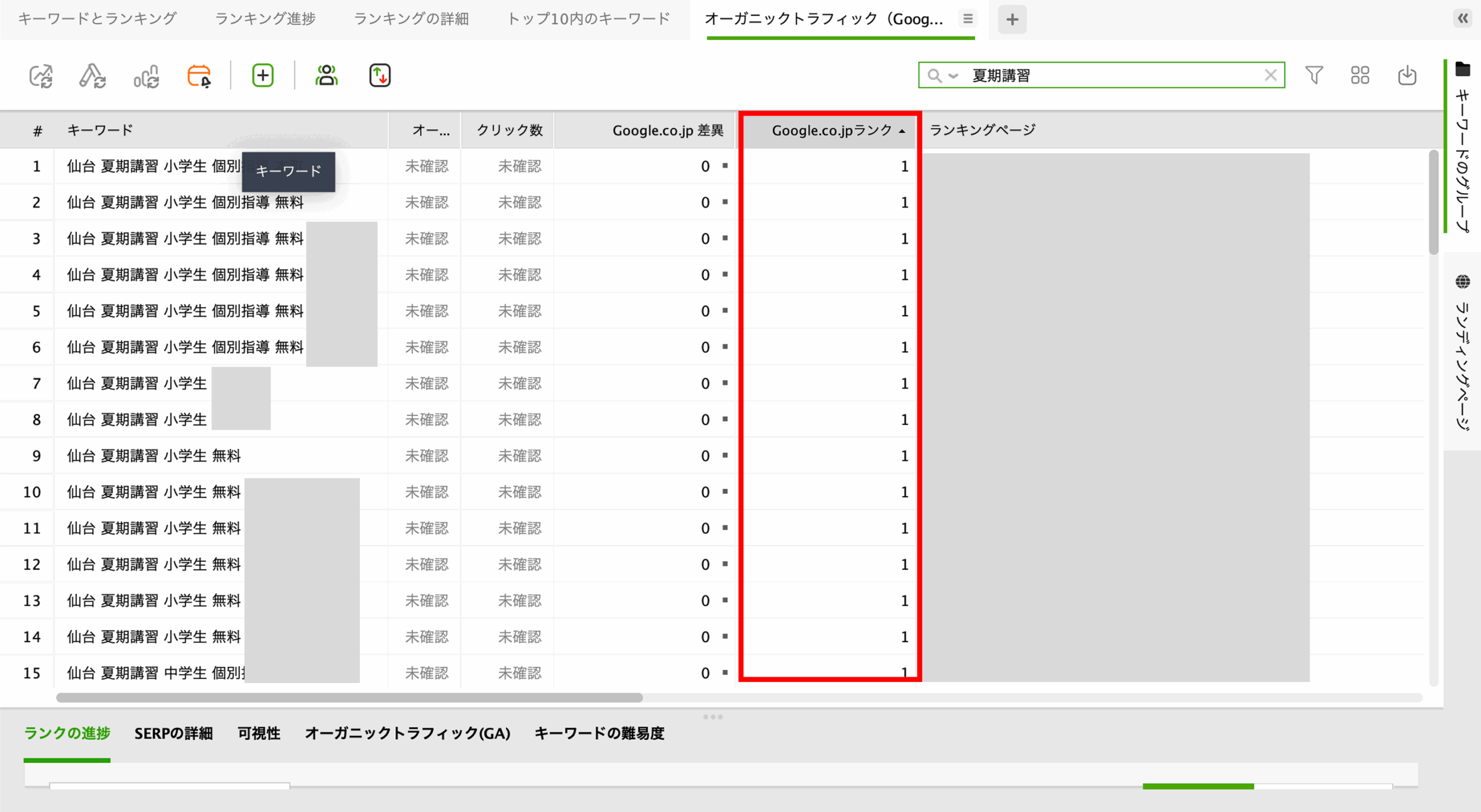
| Local keyword rankings | Not ranked | Top positions in Japan local search |
| Inquiry volume | Occasional | Consistent monthly inquiries |
| Inquiry quality | Mixed | Higher-intent parents |
◼️Ranking results
Why it worked in Japan :
- Parents research deeply on the web in Japan
- Local SEO is powerful in Japan marketing
- Trust content converts better than “sales copy” for Japan web users
Micro summary: web marketing in Japan improves fast when SEO pages match Japan intent and marketing trust signals are visible on the web.
Case Study 2: Fixing Ineffective Web Pages in Japan
Sometimes the problem is not “more content.” It’s “wrong structure.”
Situation: A cram school had pages and blogs, but web marketing in Japan performance was weak.
Problems (marketing friction on the web in Japan):
- Pages were written from the school’s perspective
- Headings didn’t match Japan search behavior
- Important pages were buried
- Internal linking didn’t guide users to inquiry
Fix (web marketing in Japan improvements):
- Rewrote titles and headings around Japan search intent
- Clarified page roles (home = reassurance, service = detail, blog = answers)
- Built a simple internal link flow: blog → service → contact
Results:
| Metric | Before | After |
| Session time | Short | Longer |
| Bounce rate | High | Lower |
| Inquiry conversion | Low | Improved |
| User clarity | Confused | Clear |
Micro summary: Even if SEO tactics are global, web marketing in Japan succeeds when the web structure supports how Japan users think and decide.
Case Study 3: Building Trust Through Web Content Marketing
In education, trust beats price—and that is especially true in Japan.
Challenge: The website didn’t communicate credibility, so marketing performance stayed flat even with traffic.
Trust-first web marketing in Japan actions:
- Published calm, detailed explanations of methods and expectations
- Added realistic improvement stories (no hype)
- Clarified enrollment flow and “what happens next”
- Used reassurance-focused copy instead of aggressive marketing language
Outcomes (qualitative but highly visible):
- Higher perceived credibility
- Less hesitation from parents
- More stable inquiries over time
Micro summary: In web marketing in Japan, content marketing wins when the web experience reassures Japan users and reduces decision anxiety.
How to Start Your Japan Web Marketing Journey
If you’re starting web marketing in Japan, you don’t need perfection. You need the right order of priorities.
Localizing Your Website and Web Copy
web marketing in Japan begins with localization because your website is your credibility hub.
Use this quick localization checklist for Japan:
| Element | What to do for web marketing in Japan |
| Headline | Make the purpose clear immediately |
| Body copy | Add context before strong claims |
| Tone | Polite, calm, professional |
| Proof | Add cases, numbers, real photos |
| CTA | Soft, non-pushy language |
Micro summary: In web marketing in Japan, your web copy should reduce fear before marketing asks for action in Japan.
Choosing the Right Web Marketing Channels in Japan
A common Japan mistake is copying global channel mixes.
A practical channel stack for japan web marketing:
| Channel | Role in web marketing in Japan |
| SEO | Core acquisition + validation |
| Content | Trust-building at scale |
| Social | Familiarity + proof |
| Messaging | Nurture + retention |
| Paid ads | Support + testing |
Micro summary: For web marketing in Japan, SEO and content are the marketing foundation, and other channels amplify the web trust journey in Japan.
Collaborating with Local Experts for Web Marketing Success
Many teams struggle in Japan because Japan is not only language—it’s a decision culture.
Local experts help with:
- tone and nuance
- information completeness
- “what feels credible” in Japan
- which marketing signals matter on the web
A quick partner check for web marketing in Japan:
- Do they explain “why,” not only “what”?
- Do they emphasize trust, structure, and long-term marketing?
- Can they show Japan outcomes?
Micro summary: web marketing in Japan becomes easier when local insight aligns marketing intent with Japan web expectations.
Final takeaway: web marketing in Japan is a trust-first system. If your web pages are structured, localized, and credible, your marketing performance in Japan becomes sustainable—and your web presence becomes a long-term asset.